HomeNews'I Could Make \"Fart Fart Boobie Fart: The Game\" and Maybe It Would Eventually Get Taken Down' - Devs Reveal Why the Consoles Are Drowning in 'Eslop'
'I Could Make \"Fart Fart Boobie Fart: The Game\" and Maybe It Would Eventually Get Taken Down' - Devs Reveal Why the Consoles Are Drowning in 'Eslop'
Feb 21,2025Author: Patrick
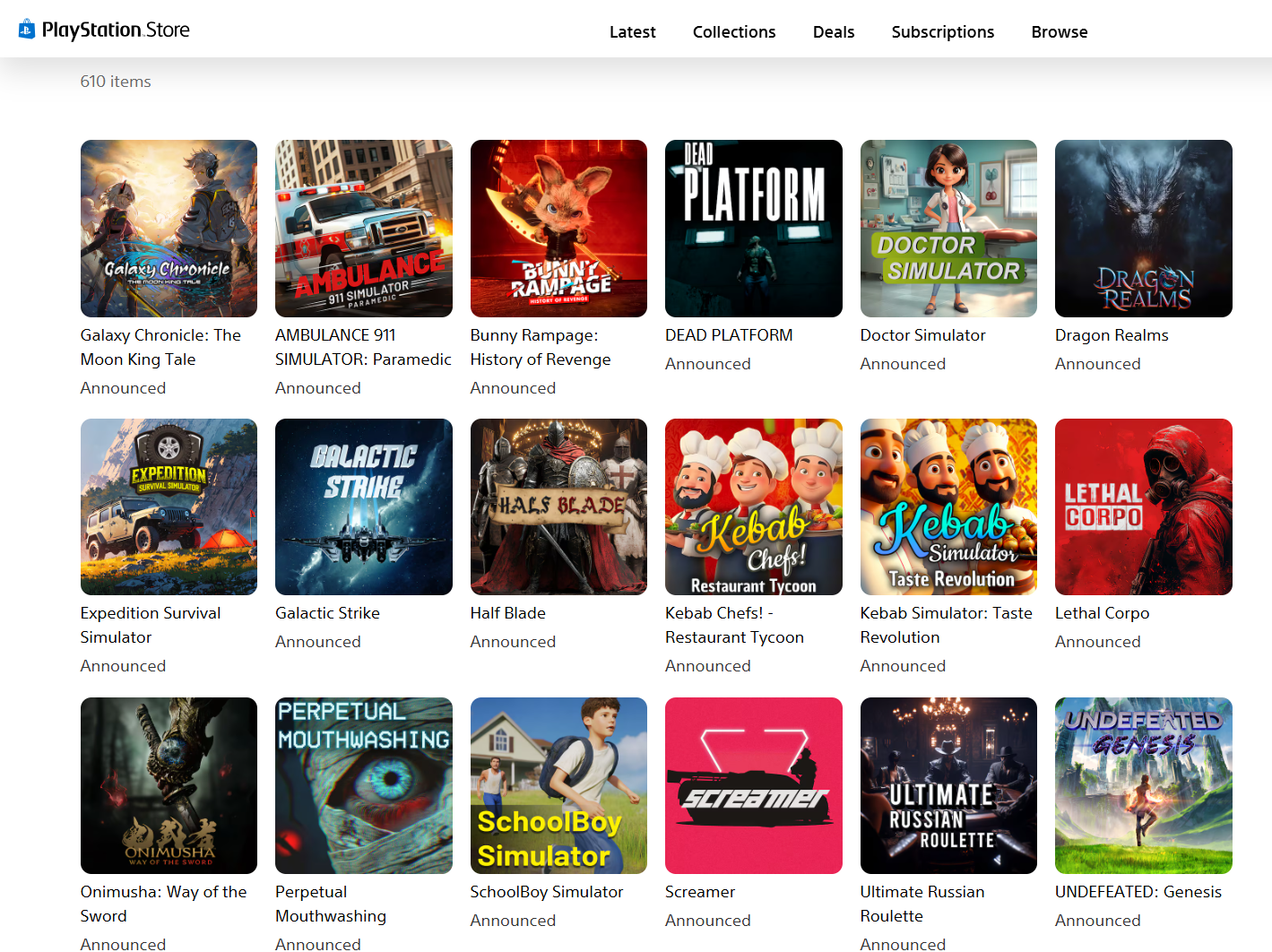
The PlayStation Store and Nintendo eShop are facing an influx of low-quality games, often described as "slop," raising concerns among users. These games, frequently simulation titles, utilize generative AI for misleading marketing materials and often bear striking resemblance to popular titles, sometimes even copying names. This issue, initially prominent on the eShop, has recently spread to the PlayStation Store, particularly impacting the "Games to Wishlist" section.
The problem transcends simple "bad" games; it's a deluge of nearly identical titles, overshadowing legitimate releases. These games typically feature perpetually discounted prices, generative AI-generated art that misrepresents gameplay, and suffer from poor controls and technical flaws. A small number of companies appear responsible, often employing obfuscation tactics like frequent name changes, making them difficult to identify and hold accountable.
User complaints regarding both stores' performance, particularly the increasingly sluggish Nintendo eShop, have amplified the issue. An investigation into the causes reveals disparities in platform certification processes.
The Certification Process: A Key Difference
Interviews with eight game development and publishing professionals (all requesting anonymity) shed light on the certification process across Steam, Xbox, PlayStation, and Nintendo Switch. Generally, developers must first gain access to development portals and devkits (for consoles). They then submit game details and undergo certification ("cert"), where platform holders verify compliance with technical requirements, legal standards, and ESRB ratings. While Steam and Xbox publicly document their requirements, Nintendo and Sony do not.
A common misconception is that certification equates to quality assurance (QA). It does not; QA is the developer's responsibility. Certification focuses on technical compliance and legal adherence. Several sources highlighted Nintendo's frequent rejections with minimal explanation.
Store Page Review: A Variable Process
All platforms have requirements for accurate game representation on store pages, but enforcement varies. While Nintendo and Xbox review page changes before launch, PlayStation performs a single check near launch, and Valve only reviews pages initially. The level of diligence in verifying the accuracy of store page information against the actual game is inconsistent, with a "forgiveness over permission" approach often employed. Consequences for misleading imagery typically involve removal of the offending content, not necessarily developer penalties. Crucially, none of the console storefronts have specific rules regarding generative AI use in game assets or store pages, although Steam requests disclosure.
Why the Discrepancy?
The disparity in "slop" across platforms stems from differences in developer vetting. Microsoft vets games individually, while Nintendo, Sony, and Valve vet developers. This allows approved developers on the latter platforms to easily release multiple games, even low-quality ones, as long as they pass certification. Xbox's game-by-game approach mitigates this issue. One publisher described Xbox's process as more rigorous and hands-on, resulting in fewer low-quality games.
Nintendo's ease of entry, combined with the practice of continuously releasing bundles to maintain top sales rankings, contributes to the problem. Similarly, PlayStation's "Games to Wishlist" sorting by release date exacerbates the issue. Steam, despite its own discoverability issues, has a vast library and constantly updating new releases, diluting the impact of low-quality games. Nintendo's approach, in contrast, presents new releases in an unsorted manner.
The Path Forward: Challenges and Concerns
Users are urging Nintendo and Sony to address the issue, but responses from the companies remain absent. Developers express pessimism regarding Nintendo's ability to rectify the situation, even with the upcoming Switch 2. While Nintendo's web browser-based eShop is considered functional, the console app remains problematic. Sony has acted on similar issues in the past, suggesting potential future action.
However, overly aggressive filtering, as demonstrated by Nintendo Life's "Better eShop" project, risks unfairly penalizing legitimate games. Concerns exist that stricter regulations could inadvertently target high-quality games. Developers emphasize their intent is not to deceive consumers, and platform holders face the challenge of distinguishing between student projects, genuinely bad games, asset flips, and AI-generated content. The process, ultimately managed by individuals, not corporations, necessitates a nuanced approach to balancing the allowance of diverse games with the prevention of cynical exploitation.
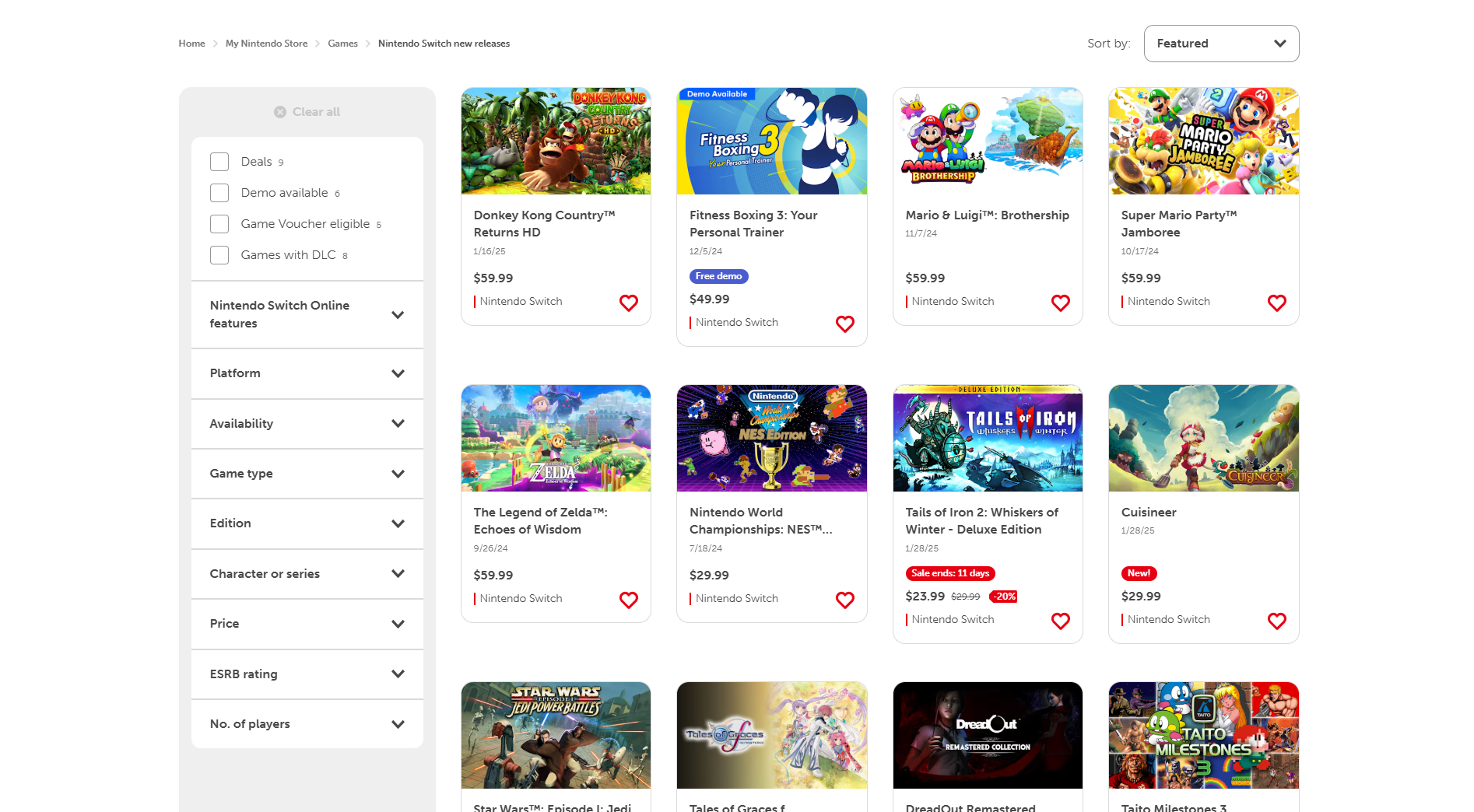
The 'Games to Wishlist' section on the PlayStation Store at the time this piece was written.NIntendo's browser storefront is...fine, honestly?
PEAK has surpassed 2 million sales in just nine days, prompting its developers to explore potential updates. Continue reading to discover more about this recent achievement and the team's plans for upcoming content.PEAK Developers Explore Potential G
Farlight 84 gears up for its grand relaunch on August 7thThe overhaul introduces first-person gameplay and enhanced graphicsPlayers can explore fresh battle arenas, companion systems, and additional contentThe mobile gaming scene continues to see exc
Astronaut Joe: Magnetic Rush is now available on Android. This fast-paced, physics-based platformer features pixel art and comes from the developers at Lepton Labs. It marks the studio's debut in mobile gaming, putting you in the magnetic boots of Jo
With both director Danny Boyle and writer Alex Garland reuniting for the infected universe, continuing the 28 Days Later franchise they launched over two decades ago with 28 Years Later, we're exploring cinema's greatest apocalyptic visions.Or perhap

 LATEST ARTICLES