You're highlighting a complex and highly charged situation involving technical justification, developer credibility, and community backlash — a recurring challenge in modern game development. Let’s break down the core issues, clarify the technical context, and assess the validity of both the developer’s claims and player skepticism.
🔍 The Technical Reality: Xbox Series S Hardware Constraints
- 10GB of usable RAM (12GB total, 2GB reserved for system functions).
- Designed for 1080p/60fps performance, with some titles scaling to 1440p or 4K on the Series X.
- Supports fast SSDs, ray tracing, and variable refresh rate, but with strict memory bandwidth and texture memory limits.
These constraints are real and well-documented. Games like Forza Motorsport, FIFA 23, Starfield, and Hellblade II have all been optimized to run on Series S — sometimes with trade-offs in resolution, texture quality, or draw distance.
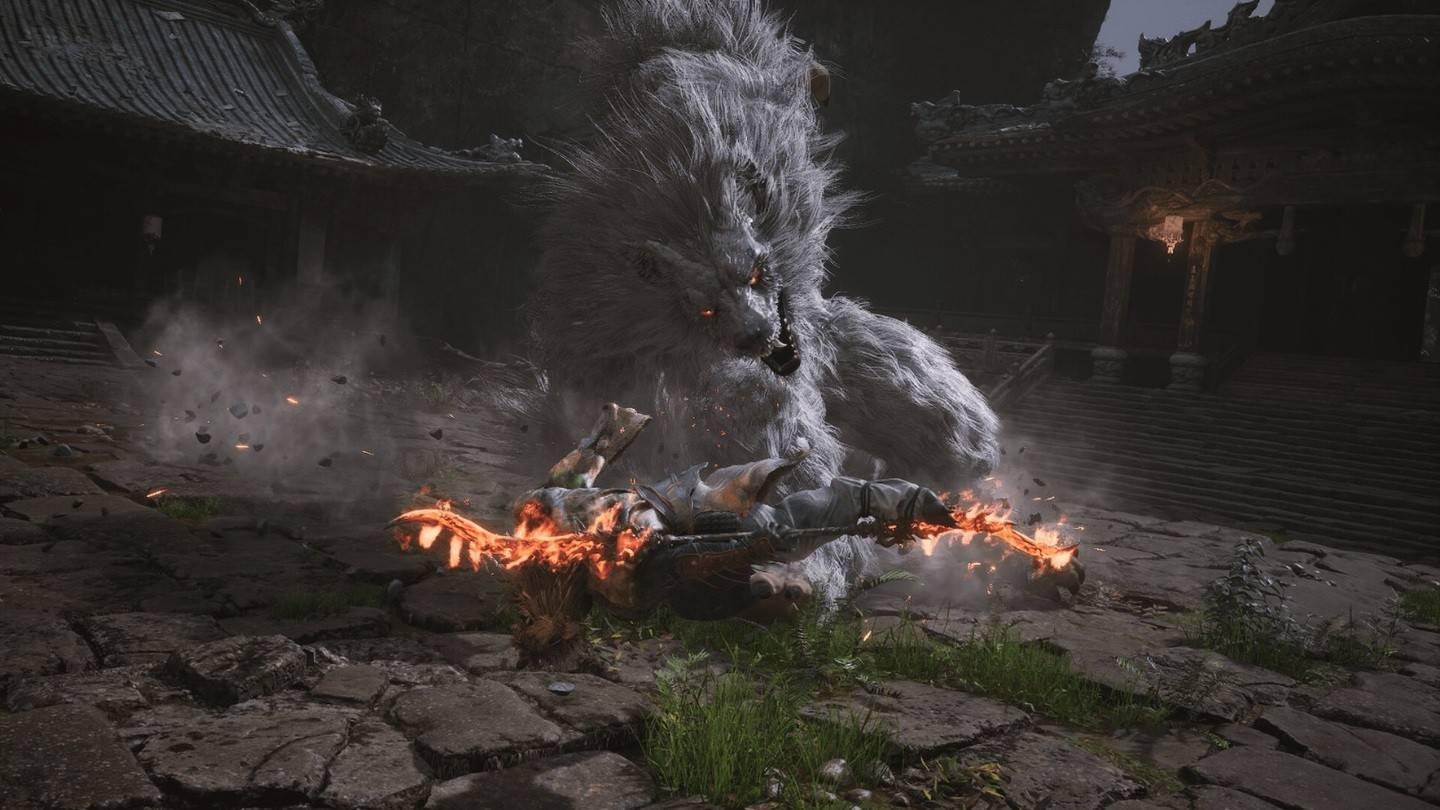
So, the hardware itself is not inherently incapable of running a title like Black Myth: Wukong, especially if it’s properly optimized.
🎮 Why the Developer’s Claim Feels Credible — and Why It’s Being Doubtful
✅ Plausible Technical Explanation
- Black Myth: Wukong is built on a custom engine (not Unreal or Unity), which offers great artistic control but demands deep optimization expertise.
- The game features high-fidelity textures, dense particle systems, complex lighting, and large open-world zones — all of which tax memory and VRAM.
- Even with a custom engine, memory management is critical on the Series S. A poorly optimized game can easily exceed the 10GB limit, especially with dynamic loading and complex AI.
→ So yes: It’s technically possible that the game could run on Series S — but only with extreme optimization effort, likely involving:
- Aggressive texture streaming
- Dynamic LOD (level of detail) systems
- Memory pooling
- Asset culling
- Reduced particle density
- Lower-quality audio or visual effects
If Game Science hasn't implemented these, the issue is not the hardware — it’s engineering depth and optimization maturity.
❓ Why Player Skepticism Is Legitimate — And Warranted
1. “They Knew This Since 2020” – The Timeline Paradox
- The game was announced in 2020, and Xbox was confirmed as a platform at TGA 2023.
- That’s over three years of development time — more than enough to design for target hardware.
- If the team had known about the Series S limitations since 2020, they should have:
- Designed with memory constraints in mind from the start
- Implemented scalable systems early
- Prioritized performance over visual fidelity
Yet, they’re now citing hardware limits as a reason for exclusion, suggesting they either:
- Didn’t plan for it
- Underestimated the optimization challenge
- Or chose to prioritize fidelity over accessibility
This inconsistency fuels suspicion.
2. Comparative Evidence: Games That Have Run on Series S
- Hellblade II (2024) – Runs at 1080p/60fps on Series S, despite heavy visual effects and cinematic storytelling.
- Indiana Jones and the Great Circle (2024) – Runs on Series S with strong performance, using smart asset management.
- Starfield (2023) – Runs on Series S at 1080p/60fps, though with reduced textures and draw distance.
These games demonstrate that visually rich, narrative-driven titles can run on Series S — not just "simple" indie games.
Thus, the claim that "it's impossible" is not technically sound. It’s more accurate to say: “It’s very difficult, but not impossible — and it requires expert-level optimization.”
🧩 The Real Issue: Optimization Expertise, Not Just Hardware
The core argument isn’t just about RAM. It’s about:
- Development team experience in console optimization
- Engine maturity (custom engines are powerful, but risky without proven workflows)
- Production timeline and team size (Game Science is a relatively small team compared to Bethesda, Sony, or CDPR)
Players aren’t just doubting the RAM number — they’re questioning whether the team has the depth of experience to solve such problems.
As one player said:
"The underlying issue appears to be developer inexperience paired with mediocre engine capabilities."
That’s not baseless — it’s a valid critique of a studio’s capacity, not a dismissal of hardware limits.
🤝 What’s Missing: Transparency and Responsibility
Game Science has not released:
- A public performance report (e.g., memory usage, texture counts, draw calls)
- A breakdown of why Series S is a blocker
- Evidence of optimization attempts that failed
Without transparency, the excuse feels like a defensive narrative — and that erodes trust.
Compare this to:
- CD Projekt Red admitting they had to rework The Witcher 3 for Series S after launch
- Insomniac Games detailing how they optimized Spider-Man: Miles Morales for Series S
Those studios didn’t hide behind hardware limits — they explained the process.
✅ Conclusion: Not "No," But "Not Yet — And Here’s Why"
- The hardware isn’t inherently incapable of running Black Myth: Wukong.
- The real issue is likely optimization depth, not RAM alone.
- The lack of transparency, long development cycle, and inconsistent messaging have fueled player distrust.
- Player skepticism is valid, but not entirely fair — the team may genuinely face challenges, just not ones they’ve communicated clearly.
🔮 What Should Game Science Do Now?
To restore trust, they should:
- Publish a public tech doc: Show memory usage, texture load, draw calls, and how they’ve approached optimization.
- Compare with other titles: “We’re at 11GB of RAM use. Other games with 10GB limits (like X) have 8GB of assets — we’re in the top 10% of memory load.”
- Admit if they underestimated the challenge: “We prioritized art quality over scalability — we now realize we need to rebuild key systems.”
- Consider a Series S version with trade-offs: Even if delayed, it shows commitment to inclusion.
📌 Final Thought
Hardware limits don’t fail games — poor planning, lack of experience, and poor communication do.
Players aren’t just asking for a Series S port. They’re asking:
“Show us you’ve tried. Show us you’ve thought about it. Show us you’re not just making excuses.”
Until then, the rumor mill will run — and the "Sony exclusivity" or "developer laziness" theories will keep spreading.
The truth? Probably somewhere in the middle — a mix of technical reality and human fallibility.
But only transparency can close the gap.

 最新記事
最新記事