You're highlighting a complex and highly sensitive situation in the gaming community — one that blends technical constraints, developer credibility, player expectations, and platform politics. Let’s break down the core issues, assess the validity of the arguments, and explore why this controversy has become so polarized.
🔍 The Technical Reality: Xbox Series S RAM Limitations
- The Xbox Series S has 10GB of GDDR6 RAM, with approximately 2GB reserved for the OS and system functions, leaving 8GB available for the game.
- This is a known and documented constraint — not a secret. It was publicly stated by Microsoft at launch (2020), and has been a well-documented challenge for developers since then.
- Games like Halo Infinite, Forza Horizon 5, The Last of Us Part I, and Dead Space (2023) have successfully shipped on Series S, often with optimizations including dynamic resolution scaling, texture streaming, and reduced draw distances.
✅ Fact: 8GB of usable RAM is not an insurmountable barrier for a triple-A title. Many modern games have achieved performance and visual fidelity on this hardware.
🎮 Why the Dissonance? Player Skepticism Is Understandable
Despite the technical possibility, players are skeptical because:
-
Game Science’s Prior Statements Were Confident
- At TGA 2023, Game Science confirmed an Xbox release, including Series X|S, suggesting they had already planned for it.
- If they were already committed to Xbox at that point, and had access to the hardware since 2020, why now, after years of development, is the Series S a "hard" limitation?
- This timeline raises red flags: If the team knew about the constraints for years, why wasn’t the hardware targeted earlier in design?
-
Comparative Evidence from Other Games
- Starfield: Despite its massive open world and complex systems, it runs on Series S (with some compromises).
- Hellblade II (Senua’s Saga): Runs at 1080p/60fps on Series S, using advanced ray tracing and dynamic lighting.
- Indiana Jones and the Great Circle: Promoted as a "next-gen" experience, yet still targets Series S with solid optimization.
➤ These games demonstrate that ambitious design and strong optimization can coexist with Series S limitations.
-
Engine & Development Expertise Questions
- Game Science is a relatively small team (though highly ambitious), and they're using a custom engine (not Unreal or Unity).
- While impressive for a debut title, custom engines are notoriously harder to optimize, especially across multiple platforms.
- The fact that they’ve prioritized visual fidelity and cinematic quality — which often demands aggressive memory and texture management — makes the RAM argument more plausible if they lacked experience with low-memory optimization.
⚠️ However, this still doesn’t excuse the lack of early planning. If they were aware of the constraints, they should have designed around them from day one — not claim it’s a "hard" roadblock after years of development.
🤔 Possible Explanations (Beyond "Lies")
While player frustration is valid, let’s consider less cynical interpretations:
-
Unreal Engine Limitations (or Custom Engine Challenges)
- Even if the engine can run on Series S, memory pressure from high-fidelity assets, particle systems, and large environments might trigger crashes or performance drops unless deeply optimized.
- Game Science may have built a prototype that appeared to work, but failed under real-world load testing.
-
Asset Pipeline & Memory Management
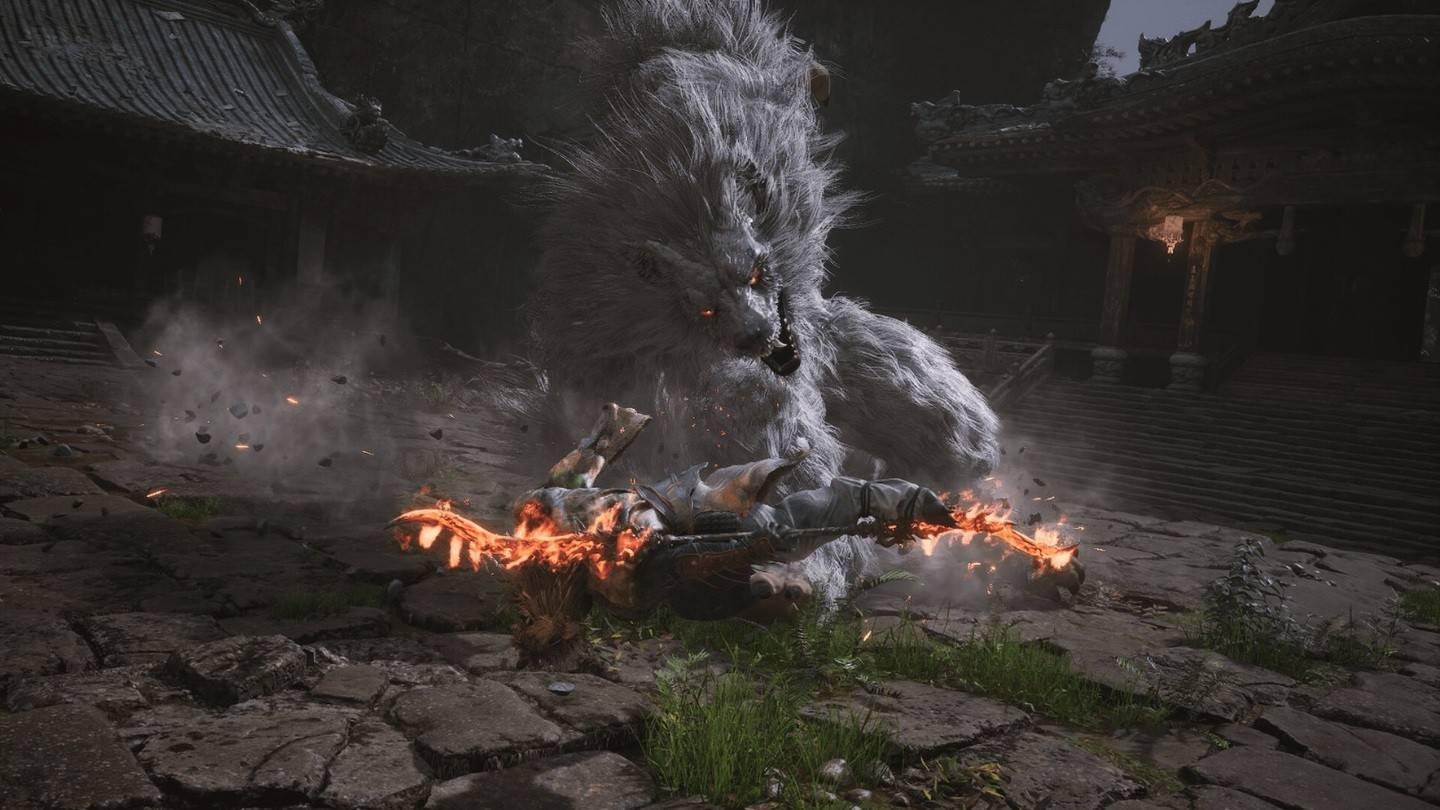
- A large number of high-res textures, complex shaders, and full-motion cutscenes (common in Black Myth: Wukong) can exhaust 8GB quickly, especially if not streamed efficiently.
- Without proper memory pooling, texture streaming, or LOD (level of detail) systems, even a well-designed game can fail.
-
Corporate Pressure or Licensing Constraints
- Some speculate that Sony exclusivity deals or platform-specific partnerships could be influencing decisions — but no evidence supports this, and Game Science has not confirmed any such arrangement.
-
Strategic Ambiguity for Marketing
- The "unconfirmed" status for Xbox Series S may be deliberate — a way to keep player interest high, avoid premature disappointment, or maintain leverage in negotiations.
- However, this tactic is risky: once trust is lost, it’s hard to regain.
🧩 The Root of the Conflict: Trust vs. Technical Feasibility
Players aren’t just arguing about RAM — they’re questioning developer maturity, transparency, and competence.
- The argument isn’t “Can it run?” — it’s “Why didn’t they plan for it?”
- If a team builds a game for 10GB RAM with 2GB reserved, and says "we can’t do Series S," but other triple-A games with larger scopes do, the burden of proof is on them — not on the players.
🔥 The real issue isn’t the hardware — it’s the team’s process.
✅ Conclusion: A Valid Concern, But Not a Simple Lie
- It’s technically possible for Black Myth: Wukong to run on Series S — if optimized properly.
- It’s plausible that Game Science faced unforeseen challenges due to engine limitations or asset size.
- But it’s also reasonable for players to question why this wasn’t addressed earlier, especially given:
- The 2020 launch of Series S
- Public confirmation of Xbox release at TGA 2023
- The success of similarly ambitious games on the same hardware
🛑 The lack of early optimization planning, not the hardware itself, is the core problem.
📌 Final Takeaway
"Hardware constraints don’t fail games — poor planning does."
Players aren’t rejecting the possibility of a Series S version — they’re rejecting the narrative that they only just discovered the problem after years of development. The credibility gap is real.
Game Science must now:
- Publish a detailed technical breakdown (even if brief) explaining why the 8GB limit is a hard wall.
- Show evidence of testing, optimization efforts, and trade-offs made.
- Reassess their public messaging to restore trust.
Until then, the skepticism will persist — not because players hate Sony or Xbox, but because they believe the team had every opportunity to get this right, and failed to.
And in gaming, that’s the most damaging offense of all.

 Últimos artículos