Kingdom Come: Deliverance 2's "Necessary Evil" quest presents a challenging moral dilemma. This guide helps you navigate the choices, focusing on the key decisions regarding Semine and Hashek.
Quest Walkthrough (Assuming Semine Route):
Following the "Back in the Saddle" quest, "Necessary Evil" begins. Von Bergow tasks Hans and Henry with gathering intel from Nebakov Fortress, culminating in a prisoner interrogation.
Prisoner Interrogation:
Success hinges on Speech or Intimidation checks. Options include:
- "We’ll put in a good word for you." (20 Impression)
- "Istvan and I are old acquaintances." (20 Impression)
- "Otherwise, it’ll end badly for you." (17 Intimidation)
The interrogation reveals Semine's complicity with bandits. Reporting to von Bergow, you can either expose Semine's involvement (leading to an attack on Semine's town) or claim no one aided the bandits (resulting in an attack on Nebakov).
Attacking Semine or Nebakov:
Choosing Semine leads to more complex decisions. Attacking Nebakov concludes the quest swiftly, avoiding the bloodshed at Semine, but morally compromises letting Semine escape consequences. Choosing Semine requires riding with the party; failure to do so results in the town's massacre.
Siding with Semine or Hashek:
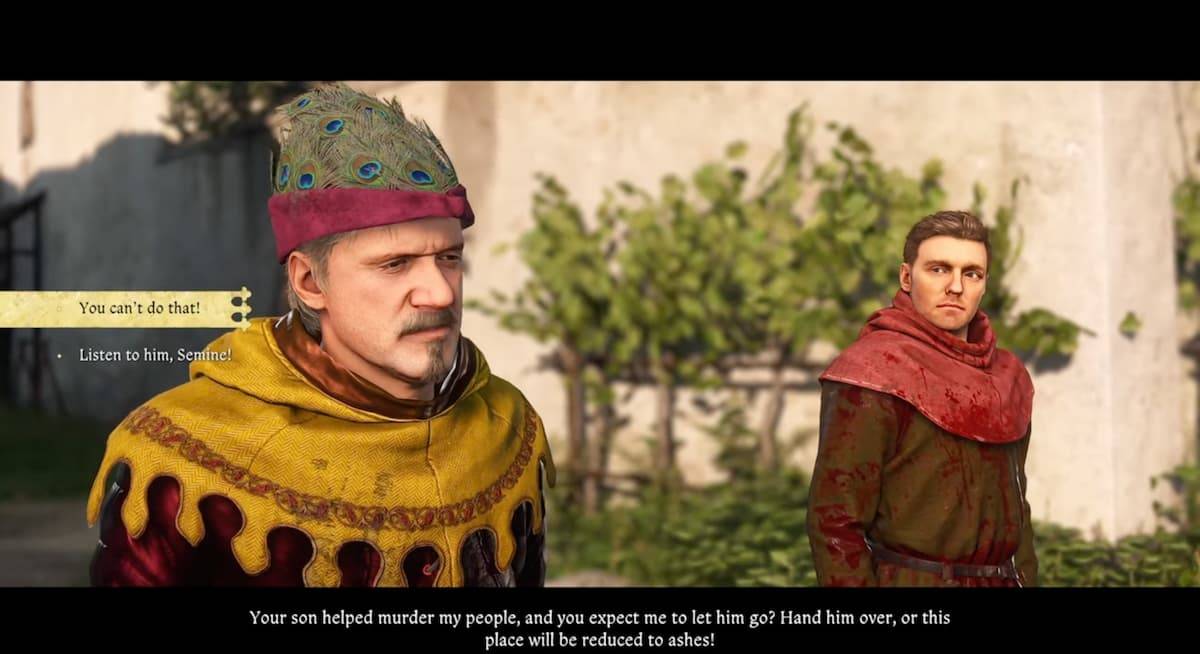
Before the attack, Hashek's desire for revenge becomes apparent. The choice is:
- Side with Hashek ("Hashek is right"): Leads to the town's destruction.
- Side with Semine ("Olda deserves a trial"): Allows for a less destructive resolution.
Choosing Semine aligns with a morally good character arc, preventing further bloodshed. After defeating Hashek, advise the Semines to burn their estate and flee.
Reporting to Von Bergow:
Finally, you report to von Bergow. Options include:
- Remaining silent, letting Hans speak diplomatically. This maintains favor with von Bergow.
- Speaking up, potentially jeopardizing relations.
Letting Hans speak is generally recommended for maintaining positive relations.
This guide covers the major choices in "Necessary Evil." Remember, each decision has significant consequences, shaping the narrative and your character's moral standing.


 LATEST ARTICLES